

Misrepresentation of Sanskrit in Western Academia
Post On:March 2, 2026
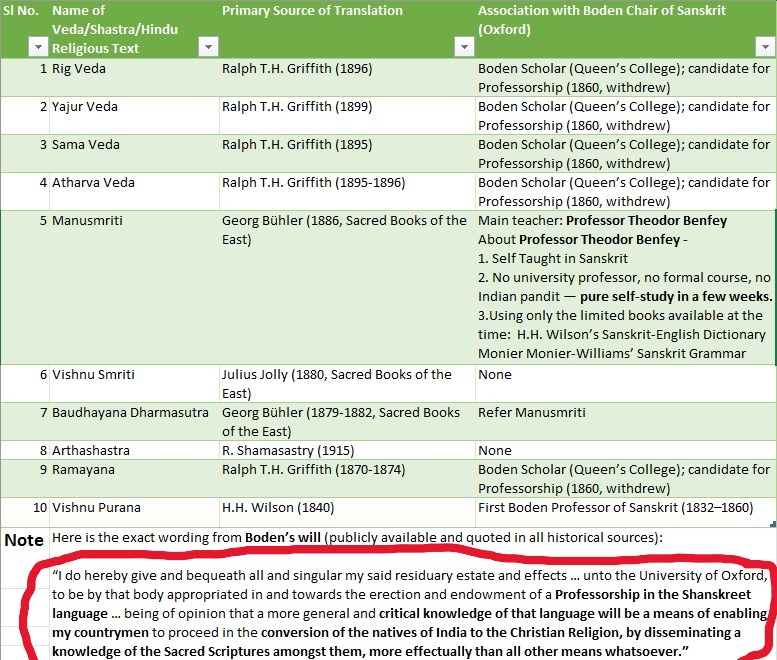
For generations, Western universities have shaped how the world understands Hinduism. While some scholars have contributed meaningfully, a troubling pattern has also taken root: Sanskrit and Hindu traditions are often interpreted through external ideological filters rather than through the philosophical frameworks that define them. This has led to widespread distortion in classrooms, textbooks, and academic discourse.
Instead of drawing on traditional commentaries, darśana-based reasoning, or the lived experience of Hindu communities, certain programs rely on theories from psychoanalysis, Marxism, or colonial anthropology. These approaches frequently strip Hindu texts of their spiritual, ethical, and philosophical depth. Students encountering Hinduism for the first time often walk away with impressions shaped by conflict, pathology, or sensationalism rather than by the richness of the tradition.
This problem becomes even more serious when institutions use language that would never be applied to other faiths. At the University of Toronto, for example, course materials have used terms such as “pornography” in the context of Hindu studies — a choice that is both academically irresponsible and deeply disrespectful. At the same time, departments often avoid inviting genuine Hindu scholars. When they do bring in individuals with Hindu‑sounding names, it is frequently those whose views align with pre‑set agendas, creating the illusion of representation while excluding authentic voices.
These patterns are not accidental; they are reinforced by academic cultures that reward conformity. Graduate students quickly learn that career advancement depends on repeating the same narrow frameworks rather than pursuing balanced, textually faithful scholarship. This produces a new generation of academics who may be well‑trained but are shaped by the same blind spots. Meanwhile, universities often invoke “academic freedom” to defend these practices while overlooking ethical lapses — a concern highlighted by recent controversies at Harvard.
This is not a rejection of Western academia. Many scholars engage Hindu traditions with respect and integrity. But the structural issues are real, and they affect how millions of people — including our own children — come to understand their heritage.
As a community, we cannot remain silent. We have both the right and the responsibility to speak clearly about how these practices affect us and our children and public perception of us.
We call upon the University of Toronto to initiate an open, good‑faith dialogue with the Hindu community.We call upon the institution to step down from the high pedestal of abstract “academic freedom” and engage with the lived reality of how its actions are perceived by the very community whose traditions it studies.
Our expectations are simple and reasonable:
• Include traditional Hindu scholars in curriculum design, guest lectures, and academic panels.
• Engage with the community respectfully and transparently, acknowledging concerns rather than dismissing them.
• Ensure accountability when course content crosses ethical or cultural boundaries.
• Support students who feel misrepresented or marginalized.
• Strengthen Hindu scholarship by building partnerships rather than perpetuating exclusion.
Hinduism is one of the world’s oldest and most sophisticated intellectual traditions. It deserves to be studied with accuracy, dignity, and respect. By standing together — informed, organized, and principled — we can ensure that future generations encounter Hinduism not through distortion, but through truth.