

Academic Vultures: Munk School & Sabarimala
Post On:November 23, 2025
A Familiar Pattern at the University of Toronto
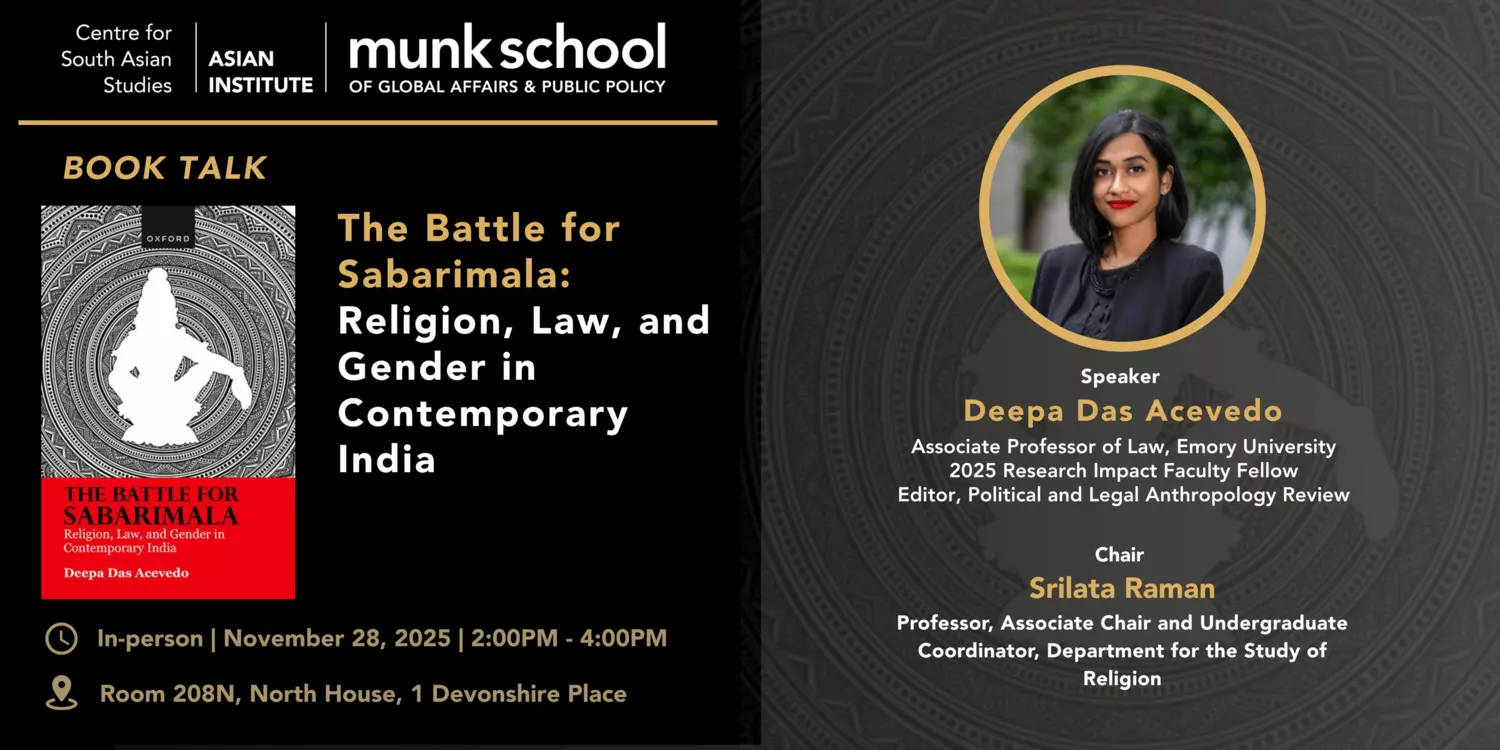
The University of Toronto’s Munk School of Global Affairs has once again turned its gaze toward religion, and—true to form—its favourite subject, Hinduism. The latest event centers on the “Battle for Sabarimala,” a topic that has already stirred deep emotions and controversy across India.
Timing and Symbolism
The timing of this discussion is not incidental. It coincides with the annual pilgrimage season, when millions of devotees throng the Sabarimala temple in Kerala. For many Hindus, this period is sacred, filled with discipline, devotion, and collective spiritual energy. To see an academic institution spotlighting controversy at precisely this moment raises questions about intent and sensitivity.
Controversy as an Academic Magnet
Observers find it intriguing that the Munk School repeatedly gravitates toward themes that trigger discord. The featured author, Deepa Das Avocado, has openly stated that her book explores “internal divisions within Hinduism.” While academic inquiry thrives on debate, the choice of framing—highlighting fractures rather than unity—echoes a broader pattern in the institution’s history of dabbling in trouble.
Academic Activity or Academic Vultures?
One could argue that such events fall under the umbrella of academic activity. Yet, that defense holds weight only if the institution’s past record demonstrates balance—acknowledging Hinduism’s contributions, philosophies, and positive legacies alongside its challenges. Without such balance, the exercise risks resembling what many ardent Hindus perceive as “academic vultures,” circling around pain points rather than showing empathy.
Political Realities in Kerala
The discussion cannot be divorced from the political context in Kerala. The state government has often been accused of adopting an anti-Hindu stance, evident in the inadequate facilities provided to pilgrims and allegations of mismanagement and pilferage of temple properties and funds. For devotees, these realities compound the sense of injustice and deepen the wounds.
Pain and Perception
In this context, the academic spotlight on Sabarimala feels less like detached scholarship and more like a probing of raw wounds. Devotees already carry considerable pain, and to see foreign academicians waxing eloquent about these struggles—without demonstrating empathy or respect for sensitivities—intensifies the perception of exploitation.
A Call for Respectful Engagement
If the University of Toronto wishes to maintain credibility in its exploration of religion, it must move beyond controversy-driven framing. Genuine scholarship requires balance: acknowledging the richness of Hindu traditions, the resilience of its communities, and the lived realities of its devotees. Without this, events like the “Battle for Sabarimala” risk being seen not as academic inquiry, but as opportunistic dabbling in turmoil.